Lecture on modeling city growth
Yesterday, I gave lecture "What makes human behavior interesting to physicists?" (lt. "Kuo fizikams įdomus žmonių elgesys?") to a large group of high school students participating in a project "Student for a day", organized by Vilnius University.
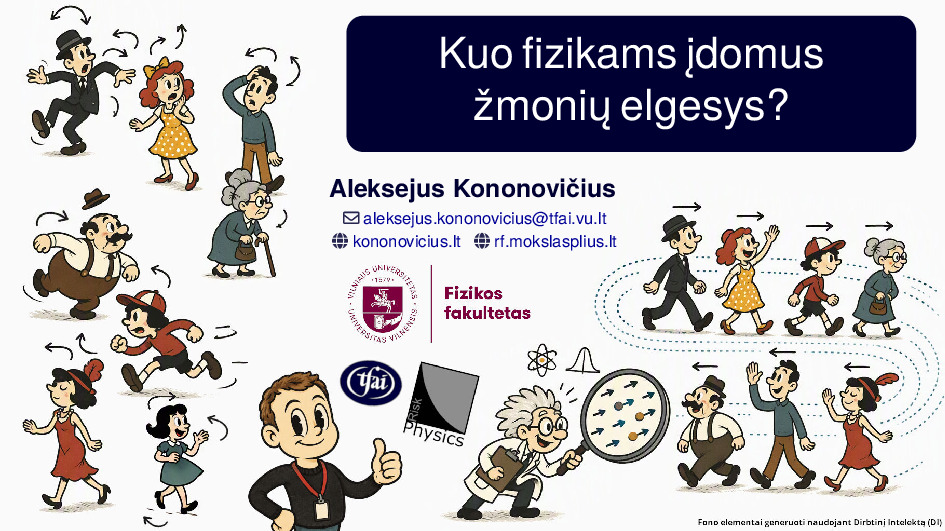
While I do not teaching anything directly related to my research, I have volunteered to do a special introductory lecture and try to explain why physicists are interested in social systems. Initially, I intended to tell students more-or-less about the same things I did when giving a talk at Nacionalinė moksleivių akademija. Yet instead of simply trimming the lecture, I have decided instead to focus on a single example and develop it a bit more. So, in the end I have talked about how "normal" (Gaussian) humans create cities that are rather "peculiar". This lead me to talk about Malthus and Verhulst models of population growth (dedicated blog post should be published soon) and then pivot to preferential attachment as seen in Simon model (I hope to prepare dedicated blog post early next year).
If you are interested, you can take a sneak peek at my slides here (though they are in Lithuanian).